How the Honeywell Whole House Ventilation Control Works
Honeywell's whole house ventilation controls, such as the W8150A1001 Fresh Air Ventilation Control, operate on a simple time-based principle. You set the controller to run the fresh-air fan for a specified number of minutes per hour, and it does exactly that. It does not care whether anyone is home, whether the air is actually stale, or whether the bedrooms are empty for the day.
Timer solutions meet the letter of the building codes by bringing in a calculated amount of outdoor air on a schedule, but with some shortcomings.
The Problem with Timer-Based Ventilation
A "dumb timer" doesn't know what's happening inside your home. It can't tell the difference between a packed dinner party and an empty house at 2pm on a Monday afternoon. Here are the most common issues homeowners report with timer-based systems:
1. Wasted Energy and Money
Timer-based controllers run the ventilation fan regardless of whether fresh air is needed. On mild days when doors and windows are open, the system continues to waste energy by mechanically pulling in outdoor air. That means unnecessary HVAC load, higher utility bills, and the potential for comfort and noise complaints.
2. Over-Ventilation When Air Is Already Fresh
A scheduled system doesn't respond to actual conditions. If you spent the afternoon cooking with the exhaust fan on, your timer-based controller will still dutifully trigger the fan at the top of the hour. You've already flushed the air, but the controller doesn't know that.
3. Under-Ventilation When It Matters Most
This is the bigger and more dangerous issue. A timer-based system can leave you under-ventilated during the very moments you need fresh air most. Imagine a Friday night sleepover with the kids in a closed bedroom or a home office during a long Zoom meeting marathon. Stale air laden with CO2 builds up fast, and a timer set to "20 minutes per hour" may not be enough to clear the air before the next cycle begins.
4. No Way to Target Hotspots
A whole-house timer assumes air is uniform throughout the home. It isn't. The bedroom where two people sleep with the door closed will accumulate stale air far faster than the living room. A single timer-based controller can't respond to localized spikes in stuffiness, fatigue-inducing CO2, or pollutant buildup.
In short, the Honeywell whole house ventilation control does the job it was designed for, but it's a solution built for an era before affordable CO2 sensing became widely available.
What Is Demand-Controlled Ventilation (DCV)?
Demand-controlled ventilation (DCV) flips the model. Instead of running on a schedule, the system monitors indoor air quality in real time, typically via a CO2 sensor. It calls for the ventilation fan only when air quality drops below a defined threshold.
The science is simple and well-established: humans are the primary source of indoor CO2. As CO2 rises, so do other contaminants like body odor, VOCs from off-gassing furniture, and moisture from breath. The EPA, ASHRAE, and Health Canada all reference CO2 as a reliable proxy for overall indoor air quality.
DCV has been used in commercial buildings for decades, where it dramatically reduces energy costs while improving occupant comfort and productivity. The good news? The same technology is now available for homeowners and it doesn't require a commercial-grade budget.
Meet the Sanobreeze: A Smarter Alternative to Timer-Based Ventilation Controls
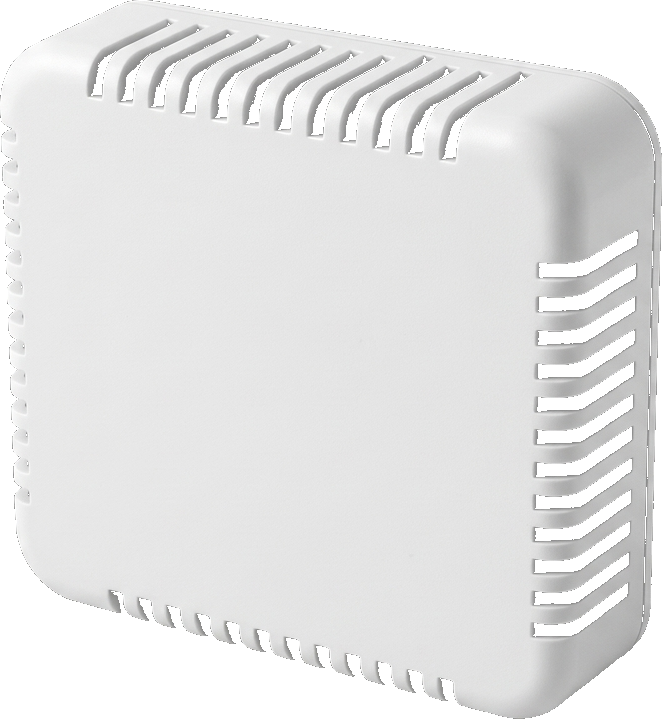
The Sanobreeze by Rylo Systems is a compact, CO2-based demand ventilation controller designed for exactly the gap that the Honeywell whole house ventilation control leaves open. At $99 (regularly $250), it brings true demand-controlled ventilation into the reach of everyday homeowners.
Here's what makes it different:
1. It Breathes with Your Home
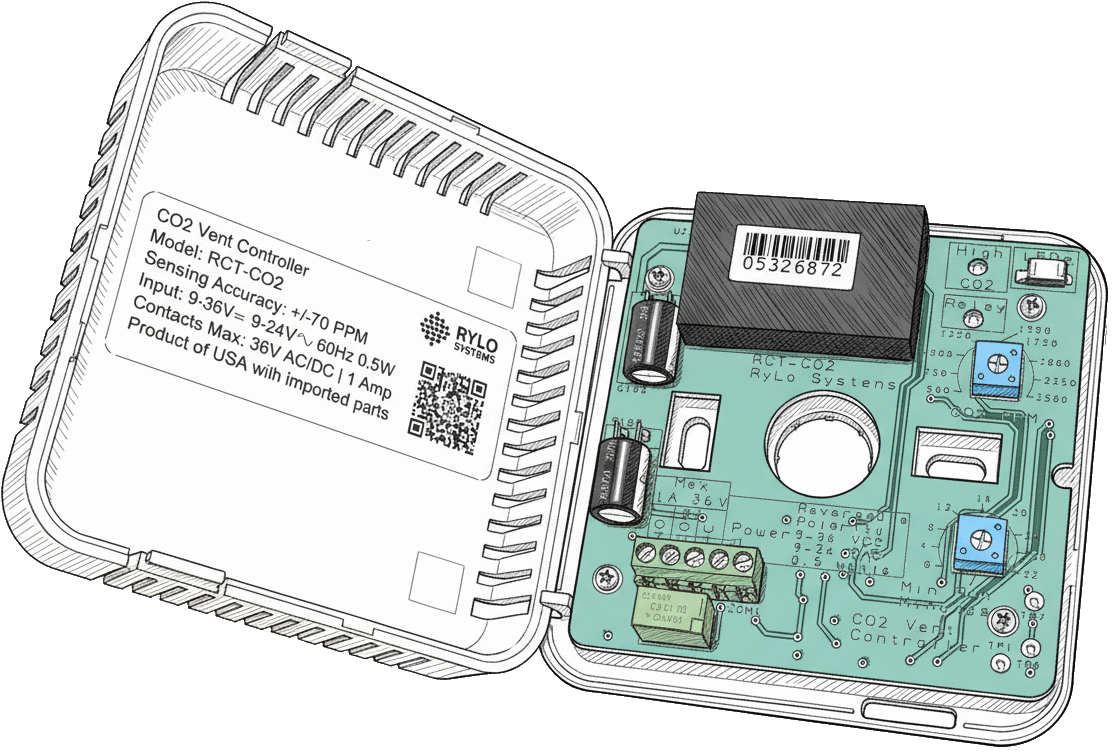
The Sanobreeze constantly measures CO2 levels in the space where it's installed. When levels rise above your custom setpoint, anywhere from 500 to 2500 PPM, the controller closes its relay and turns on your ventilation equipment. When the air is clean again, it shuts off. No waste. No guesswork.
2. It Knows When You Need Fresh Air and When You Don't
A timer can't tell the difference between an empty house and a full one, but the Sanobreeze can. The controller responds to actual occupancy in real time - whether it's a sleeping family, a home office, or a weekend with guests. This is the single biggest upgrade from a Honeywell whole house ventilation control.
3. It Works with Your Existing Equipment
The Sanobreeze is designed to integrate with:
- Your existing furnace - to circulate air through the central ductwork and balance CO2 across the home
- HRV and ERV systems - to optimize energy- and heat-recovery ventilators without bringing in more outside air than needed
- Standalone fans - including bathroom exhaust fans and on-demand fresh-air vents
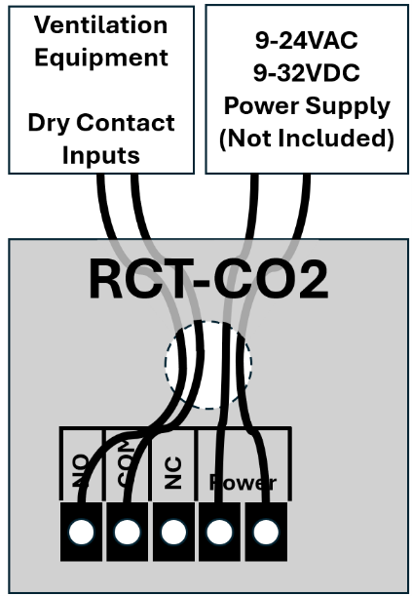
Because the controller uses a simple dry-contact relay (1 amp max @ 36V AC or DC), it works with virtually any 24V-controlled ventilation equipment.
4. It Targets the Rooms That Need It Most
Sanobreeze solves the "hotspot" problem that timer-based systems simply can't address. Install the sensor in a bedroom or home office where stale air and CO2 tend to spike, and let the central HVAC distribute the fresh air throughout the rest of the home. This delivers consistent comfort based on occupancy levels that a timer can't even begin to target.
5. Calibrated for the Standards That Matter
The Sanobreeze controller's recommended thresholds align with the leading indoor air quality guidelines:
| Standard | Recommended CO2 Level |
|---|---|
| ASHRAE | 600 PPM above outdoor levels |
| Health Canada | 1,000 PPM average over 24 hours |
| NIOSH | 1,000 PPM |
With a recommended minimum runtime of 15 minutes per trigger (configurable from 0-32 minutes), the Sanobreeze balances responsiveness with occupant comfort. The ventilation fans don't cycle on and off constantly, but they don't run all day either.
Honeywell Whole House Ventilation Control vs. Sanobreeze: A Quick Comparison
| Feature | Honeywell Whole House Ventilation Control | Sanobreeze CO2 Vent Controller |
|---|---|---|
| Trigger Method | Timer (minutes/hour) | CO2 sensor (demand-based) |
| Responds to Occupancy | No | Yes |
| Hotspot Targeting | No | Yes |
| Compatible with HRV/ERV | Yes | Yes |
| Compatible with Furnace | Yes | Yes |
| Dry-Contact Relay Output | Varies by model | Yes (COM/NO/NC, 1A @ 36V) |
| Power Consumption | Varies | < 0.5 watts |
| Sensor Accuracy | N/A (timer only) | ±70 PPM |
| User-Adjustable Setpoint | No | Yes (500-2500 PPM) |
| Price Range | $150-$300+ | $99 |
The takeaway: Honeywell makes a perfectly functional timer. The Sanobreeze makes intelligent decisions for comfortable indoor air.
The Hidden Cost of "Cheap" Timer Ventilation
If you're choosing a whole house ventilation control based purely on upfront price, the Honeywell might look like the safer bet. But the real cost of ventilation isn't the controller, it's the energy it consumes over the next 10 to 20 years.
A timer-based system can run your fan for 20+ minutes every hour, 24/7, 365 days a year. That's a lot of unnecessary runtime, especially if you aren't home 24/7. A CO2-based controller, by contrast, only runs the fan when air quality actually demands it. In many homes, that cuts ventilation fan runtime by 50% or more while delivering more comfortable air quality without unnecessary indoor temperature swings.
For a homeowner with a tight building envelope, that difference can be hundreds of dollars per year in energy savings. Over the life of the system, it dwarfs the price difference between controllers.
Installation: A 30-Minute Upgrade
One of the best things about the Sanobreeze is how simple it is to install. The controller is just 3.75 x 3.75 x 1 inches and runs on 9-24V AC or 9-32V DC. Here's the basic process:
- Turn off power at the breaker.
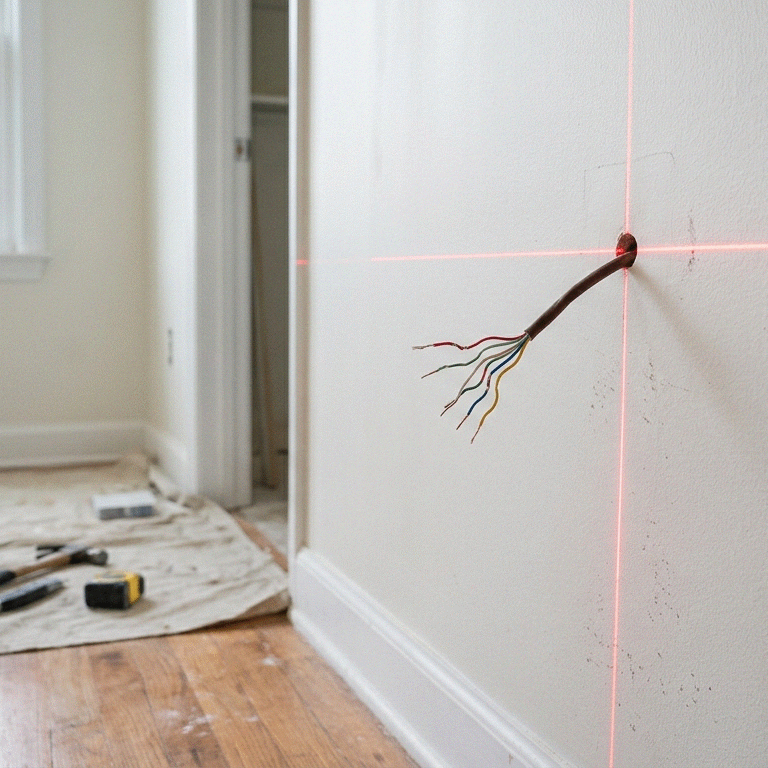
- Choose a location on an interior wall, away from windows, doors, and direct occupant breathing zones (at least 5 feet away from where people normally sit or sleep).
- Mount the controller using the included wall anchors and screws.
- Wire it to your HVAC, HRV, ERV, or bathroom fan using the dry-contact relay.
- Set your CO2 threshold and minimum run time using the two knobs on the front.
- Power up, calibrate, and forget it. The Sanobreeze auto-calibrates its sensor continuously for the life of the product.
Total install time for most homeowners or HVAC techs: 30 minutes or less. The CO2 sensor self-calibrates over the first day or two, then becomes fully accurate for the life of the product.
Who Should Choose a Honeywell Whole House Ventilation Control?
To be fair, the Honeywell whole house ventilation control still has its place. If you're working with a tight budget and need a basic code-compliance solution, a timer-based system is a reasonable choice. Honeywell's controllers are well-built and widely available.
But if you care about the actual air your family is breathing - especially overnight when CO2 levels can easily rise to over 1,500 PPM in a closed bedroom - then a demand-controlled system is the clear winner.
Final Thoughts: Your Home Should Know When You Need Fresh Air
The whole point of a whole house ventilation control is to bring fresh air in when it matters. A timer doesn't know when that is. A CO2 sensor does.
The Sanobreeze gives you the same air quality benefits as a commercial-grade Demand Control Ventilation (DCV) system at a price any homeowner can justify. It works with the equipment you already have, installs in under an hour, and starts saving you energy the moment you flip the switch.
If you've been looking at the Honeywell whole house ventilation control, it's worth taking a closer look at what a smarter, sensor-based alternative can do.
Your lungs and utility bill will thank you.
Ready to upgrade your home's ventilation?
Bring true demand-controlled ventilation to your home with the Sanobreeze CO2 Vent Controller.
Order Sanobreeze NowFree shipping · 120-day returns · Ships from Pennsylvania