
TL;DR
Home demand controlled ventilation uses CO2 or similar indoor air quality sensors to run mechanical ventilation only when indoor air actually needs refreshing, cutting wasted energy and keeping air more comfortable and healthy. It closes the gap left by airtight construction and older codes by matching airflow to real occupancy instead of a fixed schedule.
Vent Controller
What Is Demand Controlled Ventilation?
Demand controlled ventilation is a strategy that adjusts fresh outdoor airflow into the home based on real-time indoor CO2 levels. Inside the home, a sensor triggers a fan or vent when CO2 rises above a set threshold, then stops when it falls again. This control balances airflow on the actual needs of the people who are home.
The Problem: Airtight Homes and the Under-Ventilation Gap
US homes are tighter than ever. New construction uses sealed sheathing and air barriers; older homes are being weatherized. Tight envelopes save energy but trap CO2, moisture, volatile organic compounds, and odors, so indoor air stagnates without deliberate mechanical ventilation.
"Many buildings currently built to tight envelope specifications, but without whole house ventilation… are most likely under-ventilated."
(Mudarri, 2010, Building Codes and Indoor Air Quality)
The 2006 International Residential Code did not require whole-house mechanical ventilation, and many local codes followed suit. ASHRAE 62.2-2010 made it a requirement based on floor area and occupancy. The ASHRAE formula doesn't consider whether people are home; it is based on specifics of the constructed home only. Much of the US housing stock predates either of these rules, meaning no mechanical ventilation exists.
How Demand Controlled Ventilation Works
DCV uses a sensor-driven feedback loop. A CO2 sensor compares the reading to upper and lower limits, then switches the fresh air vent or fan on/off or modulates speed. When CO2 rises, fresh air dilutes it from the space; when it falls below the lower threshold, the device stops. Optimized on/off DCV outperformed continuous and intermittent schedules for energy while improving IAQ during times of high occupancy (Zhang et al.; Kabanshi et al., 2016). The upper limit prevents stuffiness; the lower limit prevents short-cycling.
Health and Sleep Benefits
The bedroom shows why DCV matters. Two adults behind a closed door can push CO2 past 2,000 ppm overnight (Supported by both Rylo Systems testing and Xu X, Lian Z, Shen J, et al. 2021). Xu et al., Strøm-Tejsen et al., and Lan et al. have published studies which all tied bedroom CO2 to sleep quality and next-day performance (Xu et al., 2021; Strøm-Tejsen et al., 2016; Lan et al., 2021).
Health Canada recommends a 24-hour average of 1,000 ppm; ASHRAE suggests indoor CO2 no more than about 700 ppm above outdoor ambient (roughly 1,100 ppm) (Health Canada, 2021; ASHRAE 62.2-2010, 2010). Studies have linked poor ventilation with high levels of CO2 to headaches, fatigue, and reduced decision-making and performance (Maula et al. 2017; Vehviläinen et al. 2016; Maddalena et al. 2015). Other studies cited by the US EPA's publication found thermal and IAQ discomfort impairs perceived air quality, Sick Building Syndrome (SBS) symptoms, and performance (Lan et al., 2011).
Energy and Cost Benefits
Ventilation moves conditioned air out and unconditioned air in. Ventilation can account for more than half of building energy use (Zhang et al.). Significant demand-controlled residential savings are available, especially when occupancy is low (Laverge et al., 2011). Sherman and Walker showed dynamic control meets ASHRAE 62.2 with less runtime (Sherman & Walker, 2011), and Kabanshi et al. confirmed on/off intermittent supply maintains IAQ while cutting fan energy (Kabanshi et al., 2016). Every closed-vent minute avoids unnecessary conditioning of outdoor air.
Why Continuous Exhaust and Supply-Only Systems Fall Short
A continuous exhaust fan or supply duct satisfies ASHRAE 62.2 on paper but creates pressure problems. Exhaust-only design depressurizes the home, pulling hot, humid air through walls and backdrafting combustion appliances; supply-only pressurizes it, driving moisture into cold-climate wall cavities (Finnish Society of Indoor Air Quality and Climate, 2002). Neither adjusts for occupancy, so both over-ventilate empty homes and under-ventilate crowded ones. Balanced HRVs and ERVs fix pressure but usually run fixed speed; adding DCV lets them ramp only when needed.
Comparison: DCV vs. Common Residential Ventilation Strategies
| Feature | DCV (CO2-based) | Continuous Exhaust | Continuous Supply | HRV/ERV (timer only) |
|---|---|---|---|---|
| Trigger method | CO2 or humidity sensor | Fixed timer or always-on | Fixed timer or always-on | Fixed timer or always-on |
| Matches occupancy | Yes | No | No | No |
| Pressure effect | Neutral when balanced | Depressurizes | Pressurizes | Balanced |
| Energy use | Variable; lower when unoccupied | Constant | Constant | Constant |
Cost and ROI
A standalone CO2 on/off controller can be installed for under $200 tied to an existing fan or vent; a balanced HRV/ERV with DCV runs $1,500–$5,500. Payback varies by climate and occupancy, but on/off DCV cuts ventilation runtime 30–60% versus continuous ventilation (Zhang et al.; Laverge et al., 2011). A portable CO2 logger is the fastest way to verify whether your home actually needs more ventilation.
| Approach | Typical Installed Cost | Estimated Annual Ventilation Energy Savings | Simple Payback |
|---|---|---|---|
| Continuous exhaust fan (code minimum) | $400–$1,200 | Baseline | — |
| CO2-based on/off DCV add-on | $150–$400 | 30–50% | 1–3 years |
| Balanced HRV/ERV with DCV controls | $1,500–$5,500 | 20–40% | 5–10 years |
Actual savings will vary; use these figures as a starting point for a contractor estimate or energy model, not a guarantee.
Common Myths About Home Demand Controlled Ventilation
- "Just open a window." Natural ventilation under the International Mechanical Code requires openable area equal to 4% of floor area—about 80 sq ft for a 2,000 sq ft home (International Code Council, 2009). Few homes achieve that, and open windows waste energy and let in pollen and noise.
- "DCV is only for new homes." An on/off sensor-and-relay controller can be added to any home with an exhaust fan, fresh-air duct, or forced-air furnace (Sherman & Walker, 2011; Kabanshi et al., 2016).
- "It's too complex for retrofits." Most units are wall-mounted, low-voltage, and use a dry-contact relay; installation is comparable to a thermostat (Sherman & Walker, 2011).
- "CO2 sensors are inaccurate or expensive." Modern non-dispersive infrared sensors are accurate for residential DCV and auto-calibrate to outdoor ambient (Health Canada, 2021).
- "It will over-ventilate and waste energy." On/off DCV outperformed continuous schedules in energy modeling while preserving IAQ (Zhang et al.; Laverge et al., 2011).
- "A bathroom fan is enough ventilation." Bath fans remove moisture, not whole-house pollutants; they do not provide the demand-driven outdoor air required by ASHRAE 62.2 (ASHRAE 62.2-2010, 2010).
People Also Ask About Home Demand Controlled Ventilation
What is demand controlled ventilation in a home?
Demand controlled ventilation in a home adjusts mechanical airflow based on real-time indoor CO2 or humidity, running only when air quality or occupancy calls for fresh outdoor air (ASHRAE 62.2-2010, 2010). It replaces fixed schedules with sensor-driven loops, a principle long used in commercial buildings under ASHRAE 62.1 (ASHRAE 62.1-2010, 2010).
How does demand controlled ventilation work?
A sensor measures CO2; crossing an upper threshold starts ventilation, and crossing a lower threshold stops it (Zhang et al.; Sherman & Walker, 2011). On/off relays and variable-speed fans both use CO2 as a proxy for occupancy-derived pollutants (Laverge et al., 2011).
Does demand controlled ventilation actually save energy?
Yes. On/off DCV strategies show lower fan runtime and reduced conditioning load than fixed schedules (Zhang et al.; Laverge et al., 2011). Because buildings consume about 40% of total energy and ventilation can account for more than half, trimming runtime has an outsized impact (Zhang et al.).
Is demand controlled ventilation required by code in the US?
Whole-house mechanical ventilation is required by ASHRAE 62.2-2010 for low-rise residential buildings, but DCV itself is usually optional (ASHRAE 62.2-2010, 2010). ASHRAE 90.1-2007 and IECC-2009 reference DCV for some commercial spaces (ASHRAE 90.1-2007, 2007; International Code Council, 2009).
How much does demand controlled ventilation cost?
A basic on/off CO2 controller tied to an existing fan or vent can cost under $200; a balanced HRV/ERV with DCV can run $2,500–$5,500 installed. On/off add-ons often pay back in one to three years (Zhang et al.; Laverge et al., 2011), while full balanced systems take longer.
What's the difference between DCV and an HRV or ERV?
An HRV or ERV is a balanced appliance that recovers heat or moisture. DCV is a control strategy that can be applied to any ventilation type, including HRVs and ERVs (ASHRAE 62.2-2010, 2010; Sherman & Walker, 2011). A timer-only HRV runs fixed speed; a DCV-controlled HRV speeds up only when CO2 rises.
Can you add demand controlled ventilation to an existing home?
Yes. On/off sensor-and-relay controllers can be retrofit onto existing bath fans, fresh-air vents, or forced-air furnaces (Sherman & Walker, 2011; Kabanshi et al., 2016). They are usually low voltage and wall-mounted, so ductwork replacement is unnecessary.
What CO2 level should trigger demand controlled ventilation?
ASHRAE recommends indoor CO2 within about 700 ppm above outdoor ambient, typically below 1,000-1,200 ppm; Health Canada suggests a 24-hour average of 1,000 ppm (ASHRAE 62.2-2010, 2010; Health Canada, 2021). Bedrooms should stay below 1,000 ppm for sleep quality, with performance declines above 1,800 ppm (Xu et al., 2021; Strøm-Tejsen et al., 2016).
Is demand controlled ventilation worth it?
For most airtight homes, yes. It reduces wasted energy, improves sleep, and complies with modern standards (Xu et al., 2021; Zhang et al.; ASHRAE 62.2-2010, 2010). Value is highest with variable occupancy, tight envelopes, or stuffy rooms fixed systems cannot keep up with.
How is demand controlled ventilation different from a regular bathroom fan?
A regular bathroom fan removes moisture intermittently and is not designed to dilute whole-house pollutants on demand. DCV uses a CO2 or humidity sensor to decide when outdoor air is actually needed and can control a whole-house vent, fresh-air duct, or bath fan (ASHRAE 62.2-2010, 2010; Zhang et al.). It treats ventilation as a feedback problem, not a moisture-only event.
Real-World Implementations
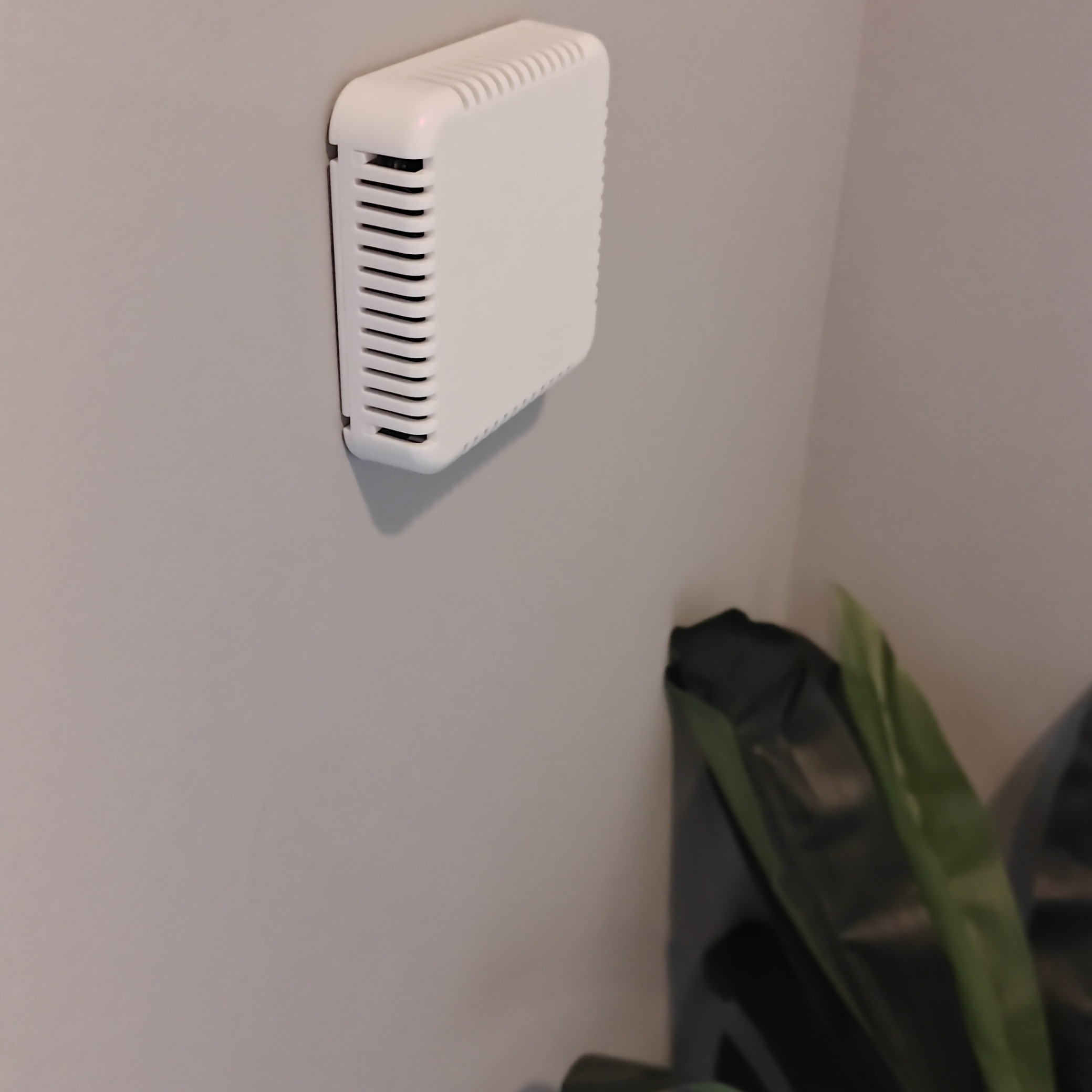
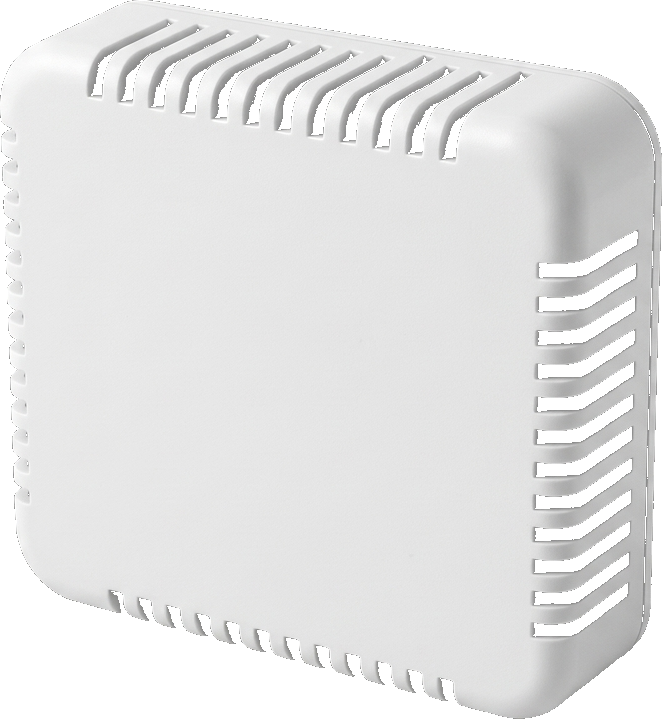
The threshold-based on/off logic described in the research, using an upper CO2 limit to start ventilation and a lower limit to stop it, is now available in consumer-grade hardware (Zhang et al.; Laverge et al., 2011). One example is the Sanobreeze vent controller, an on/off device that opens or closes a vent based on CO2, matching the feedback strategy the studies identified as outperforming continuous schedules.
Next Steps
If your home feels stuffy overnight, your CO2 is likely climbing past sleep-disrupting levels. Measure bedroom CO2 with a portable meter for a few nights. If readings regularly exceed 1,000 ppm, a demand-controlled upgrade or a balanced HRV/ERV with sensor controls can bring the air back under control while cutting wasted energy. For best results, mount the sensor on an interior wall at breathing height, away from windows, doors, people, and drafts.
References
- ASHRAE. (2010). ANSI/ASHRAE Standard 62.1-2010: Ventilation for Acceptable Indoor Air Quality. American Society of Heating, Refrigerating and Air-Conditioning Engineers.
- ASHRAE. (2010). ANSI/ASHRAE Standard 62.2-2010: Ventilation and Acceptable Indoor Air Quality in Low-Rise Residential Buildings. American Society of Heating, Refrigerating and Air-Conditioning Engineers.
- ASHRAE. (2007). ANSI/ASHRAE Standard 90.1-2007: Energy Standard for Buildings Except Low-Rise Residential Buildings. American Society of Heating, Refrigerating and Air-Conditioning Engineers.
- Batog, P., & Badura, M. (2013). [Dynamic of changes in CO2 concentration in bedrooms study]. (Referenced via Xu et al., 2021.)
- Federspiel, C. C., Fisk, W. J., Price, P. N., Liu, G., Faulkner, D., Dibartolomeo, D. L., Sullivan, D. P., & Lahiff, M. (2004). Worker performance and ventilation in a call center: Analyses of work performance data for registered nurses. Indoor Air, 14(suppl 8), 41–50.
- Finnish Society of Indoor Air Quality and Climate (FiSIAQ). (2002). Classification of Indoor Climate 2002: Target Values, Design Guidance and Product Requirements. FiSIAQ.
- Health Canada. (2021). Residential Indoor Air Quality Guideline for Carbon Dioxide. H144-81/2021E. Ottawa: Health Canada.
- International Code Council. (2006). International Residential Code (IRC-2006). Country Club Hills, IL: ICC.
- International Code Council. (2009). International Energy Conservation Code (IECC-2009). Country Club Hills, IL: ICC.
- International Code Council. (2009). International Mechanical Code (IMC-2009). Country Club Hills, IL: ICC.
- Kabanshi, A., Wigo, H., & Sandberg, M. (2016). Experimental evaluation of intermittent air supply systems in buildings. (Referenced via Applied Energy DCV study.)
- Lan, L., Lian, Z. W., & Wargocki, P. (2011). Quantitative measurement of productivity loss for determining acceptable indoor temperature. (Referenced via IAQ and performance research.)
- Lan, L., Sun, Y., Wyon, D. P., & Wargocki, P. (2021). [Sleep, CO2, and noise study, submitted manuscript].
- Laverge, J., Van den Bossche, N., Heijmans, N., & Janssens, A. (2011). Energy saving potential and repercussions on indoor air quality of demand controlled residential ventilation strategies. (Referenced via Applied Energy DCV study.)
- Maddalena, R., et al. (2015). [Decision-making performance vs. ventilation rate study]. (Referenced via Health Canada 2021.)
- Maddalena, R., Mendell, M.J., Eliseeva, K., Chen, W.R., Sullivan, D.P., Russell, M., Satish, U., and Fisk, W.J. (2015) Effects of ventilation rate per person and per floor area and perceived air quality, sick building syndrome symptoms, and decision-making. Indoor Air, 25: 362-370.
- Mudarri, D. H. (2010). Building Codes and Indoor Air Quality. Prepared for the U.S. Environmental Protection Agency. The Cadmus Group. Arlington, VA.
- Na, H., Choi, M., & Chun, C. (2012). [Influence of CO2 concentration level on sleep quality study]. (Referenced via Xu et al., 2021.)
- Seppänen, O. A., Fisk, W. J., & Mendell, M. J. (1999). Association of ventilation rates and CO2 concentrations with health and other responses in commercial and institutional buildings. Indoor Air, 9(4), 226–252.
- Sherman, M. H., & Walker, I. S. (2011). Meeting residential ventilation standards through dynamic control. (Referenced via Applied Energy DCV study.)
- Strøm-Tejsen, P., Zukowska, D., Wargocki, P., & Wyon, D. P. (2016). The effects of bedroom air quality on sleep and next-day performance. Indoor Air, 26(5), 679–686.
- Xu, X., Lian, Z., Shen, J., Lan, L., & Sun, Y. (2021). Experimental study on sleep quality affected by carbon dioxide concentration. Indoor Air, 31(2), 440–453. https://doi.org/10.1111/ina.12748
- Zhang, S., Ai, Z., & Lin, Z. (year). Novel demand-controlled optimization of constant-air-volume mechanical ventilation for indoor air quality, durability and energy saving. Applied Energy, 116954.